

If you prefer video content over text, I explain this material with fun, musical examples in my YouTube video.
How do you design slides for complex, highly-detailed information … without overwhelming your audience?
In this article, I break down the secret: the gradual reveal technique.
What Not To Do
Pretend a speaker is telling you about famous inventions from the 19th century and they pull up the slide below:
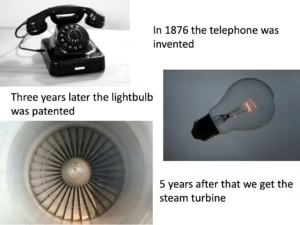
Likely, your brain feels a bit heavy. And this has to do with working memory: the limited canvas your brain uses to process new information.1
The more new information your brain is asked to process at once, the more cognitive load you experience, the more overwhelmed you feel, and the less you actually retain.
This slide is requiring you to process not just 3 different images, but 3 pieces of text related to those images containing names, dates, and actions. It’s as if the speaker just tossed several heavy balls into the air. And you only have 2 hands to catch them with.
What To Do
Here’s how Jon Krohn, bestselling author of “Deep Learning Illustrated,” delivers this message. You only need to watch about a minute from the video to get a sense of John’s technique.
Instead of showing everything at once, he gradually reveals one new piece at a time:

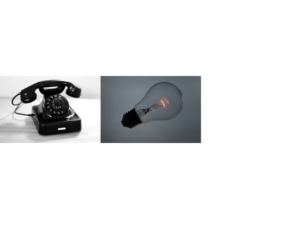
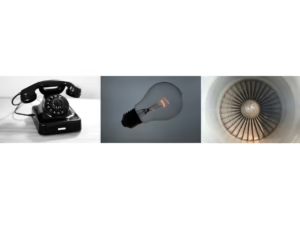
Jon allows you to process each new piece fully before moving on, reducing the cognitive load on your working memory, and optimizing your learning experience.
Summary
Slides should be simple, visual support for your words. Let them be understandable in a few seconds or less.
If you need to present complex, detailed information, aim to break it up into easily digestible pieces. Then gradually reveal each piece, one at a time, so your audience is never overwhelmed.
If you’re looking for further guidance on how to differentiate your communication skills and stand out in the workplace, take my free self-assessment.
I’m writing a book on thinking quickly, speaking clearly, presenting convincingly, and supercharging your executive presence. My current focus: a section on slide design. This will be a psychological primer on how audiences perceive visual information and how to organize that information on slides in an engaging way.
Follow me on LinkedIn for more updates on the book and its release!